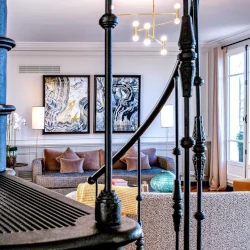

Cast Iron Spiral Stairs – European Craftsmanship for Interiors and Architecture
Cast iron spiral stairs are more than a way to move between levels. They are architectural objects: functional, sculptural and full of character. Their strength lies in the combination of durable material, ornamental detail and a compact spiral form that can transform a room, a mezzanine, a terrace or a garden entrance.
For homeowners, architects and designers looking for something more distinctive than standard metal or wooden stairs, cast iron offers a rare balance: it feels solid, looks refined and carries the atmosphere of European architectural craftsmanship.
At schodyzeliwne.pl, we focus on spiral cast iron stairs designed for individual spaces. Our service includes initial consultation, preliminary pricing, measurement, delivery and installation in Poland.
In short: cast iron spiral stairs are a strong choice when a project needs compact vertical circulation, decorative detail and a timeless architectural presence. They work well in interiors, mezzanines, renovated buildings, terraces and garden settings, provided the staircase is properly measured, installed and finished after assembly.
Why cast iron spiral stairs are returning to modern architecture
Modern architecture is no longer only about smooth surfaces and minimal detail. Many designers now look for authentic materials that add depth, texture and identity to a space. Cast iron fits this direction perfectly.
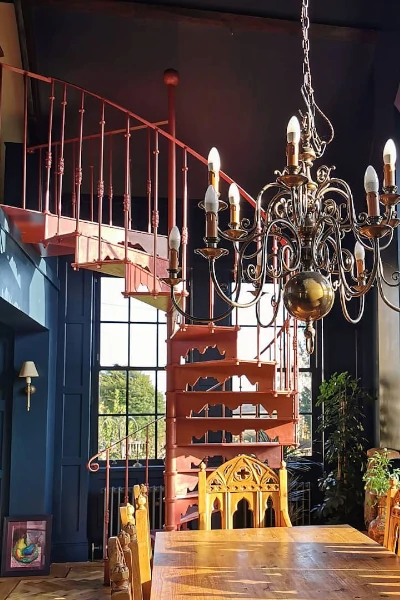
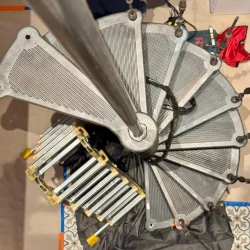
Unlike plain steel structures, cast iron allows for decorative casting. A step can be functional and ornamental at the same time. Balusters, landings and stair treads can carry patterns, rhythm and shadow. This is why cast iron spiral staircases often become a focal point rather than a background element.
Their return is not simply a matter of fashion. It reflects a wider interest in long-lasting materials, visible craftsmanship and interiors that do not look temporary.
European craftsmanship and architectural heritage
Cast iron has a strong place in European architecture. It has been used in staircases, balconies, railings, gates, urban details and historic buildings for generations. Spiral stairs made of cast iron are especially associated with courtyards, townhouses, workshops, industrial buildings and elegant residential architecture.
Today, that heritage works well in contemporary projects. A cast iron spiral staircase can bring historical depth into a modern home without making the interior look old-fashioned. It can stand against plain walls, natural wood, concrete, stone, glass or large windows and still feel intentional.
The value is in contrast: traditional casting within a modern architectural setting.
A compact solution with a strong visual effect
One of the main advantages of spiral stairs is their compact footprint. A spiral structure uses vertical space efficiently, which makes it useful where a conventional straight staircase would take too much room.
This is especially important for:
- mezzanines,
- attics,
- duplex apartments,
- garden access,
- terraces,
- balconies,
- studios,
- compact houses,
- renovated buildings.
Cast iron spiral stairs combine this spatial efficiency with a strong visual form. The circular geometry leads the eye upwards, while openwork steps help the structure feel lighter than its material might suggest.
Cast iron stairs for interiors
Inside a home, cast iron spiral stairs work best when they are treated as part of the architecture, not as an afterthought. They can connect a living room with a mezzanine, a bedroom with an upper level, a study with an attic or a main space with a gallery.
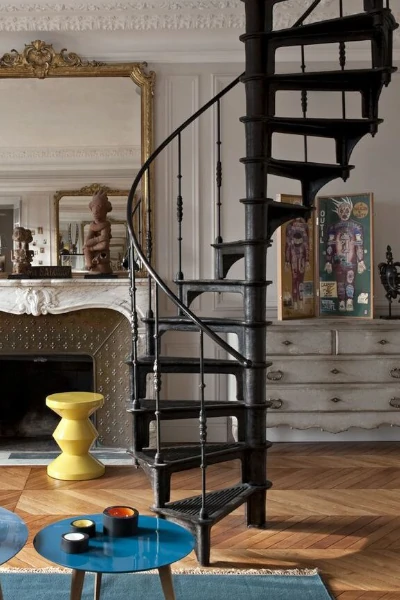
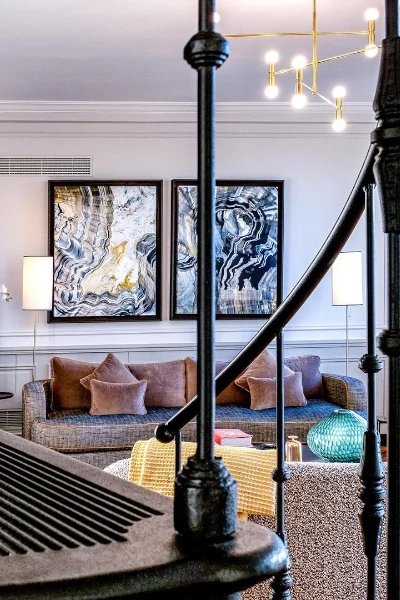
Their appearance depends heavily on the surrounding materials. In a bright modern interior, dark cast iron can create a sharp, elegant contrast. In a more classic or renovated space, the same staircase may feel natural and historically rooted.
Cast iron pairs particularly well with:
- timber floors,
- brick,
- stone,
- lime or plaster walls,
- concrete,
- glass,
- natural light,
- simple modern furniture.
The result is not limited to industrial style. Cast iron stairs can look refined, architectural and calm when placed in the right context.
Cast iron stairs for outdoor use
Cast iron spiral stairs can also be used outdoors, for example on terraces, balconies, garden levels or external entrances. In such projects, the material must be properly protected after installation.
Cast iron contains iron and can corrode if left exposed to moisture without protection. For exterior use, the surface should be finished with a suitable protective system, such as paint, lacquer, wax or another coating chosen for the specific conditions.
This is an important distinction: cast iron is durable, but durability depends on correct installation and proper surface protection.
Available diameters and project flexibility
Every space is different. That is why the diameter of a spiral staircase matters. A smaller staircase may be suitable for compact areas, while a larger one provides more generous movement and a stronger architectural presence.
Schodyzeliwne.pl offers cast iron spiral stairs in a wide range of diameters, from compact models to large, representative staircases. Smaller sizes can work well for limited spaces, while larger models are better suited to interiors where comfort, visual impact and daily use are important.
The final choice depends on the height between floors, available space, intended use, landing position and the way the staircase connects to the upper level.
Raw cast iron and finishing after installation
Cast iron stairs are installed in raw form. This is a practical approach because the elements are assembled, adjusted and connected on site. Painting before installation could lead to damage during handling or assembly.
After installation, the staircase can be finished according to the project. Common choices include black, graphite, dark grey or finishes that emphasise the raw character of the metal. In lighter interiors, a custom colour can also be used to make the staircase feel more discreet.
For outdoor use, the finishing system should be selected with weather exposure in mind
Why architects and designers choose cast iron spiral stairs
For architects, cast iron spiral stairs offer more than decoration. They solve a practical problem — vertical circulation — while adding a strong material identity to the project.
They are especially useful when the staircase must be visible and cannot be hidden. In an open-plan home, a mezzanine space or a high living room, the stairs become part of the composition. Cast iron gives that composition weight, rhythm and detail.
Designers choose cast iron when they want a staircase that feels permanent, crafted and visually memorable.
Measurement, delivery and installation
A successful cast iron spiral staircase starts with proper planning. Before choosing a model, it is important to understand the floor height, available diameter, opening position, landing shape, direction of rotation and structural conditions on site.
At schodyzeliwne.pl, the process begins with initial information and photographs. This allows us to prepare a preliminary assessment and quotation. The next steps may include measurement, selection of the right configuration, delivery and installation in Poland.
This approach helps avoid common mistakes, especially in renovated buildings, mezzanine projects and spaces with limited room.
Summary
Cast iron spiral stairs are a timeless architectural solution for people who value durability, craftsmanship and distinctive design. They save space, create a strong visual effect and work well in both modern and traditional settings.
Their greatest strength is the combination of function and character. A well-chosen cast iron staircase can connect levels, define a room and become one of the most memorable elements of a project.
If you are planning a cast iron spiral staircase for an interior, mezzanine, terrace, garden or architectural renovation, schodyzeliwne.pl can help with the first assessment, preliminary quotation, measurement, delivery and installation in Poland.
FAQ
Are cast iron spiral stairs suitable for modern interiors?
Yes. Cast iron spiral stairs work very well in modern interiors when they are treated as an architectural feature. They pair well with simple walls, wood, stone, concrete, glass and natural light.
Are cast iron stairs only for industrial or loft interiors?
No. Although cast iron is often associated with industrial and loft spaces, it can also look elegant in contemporary homes, renovated buildings, classic interiors and bright modern architecture.
Can cast iron spiral stairs be used outdoors?
Yes. Cast iron spiral stairs can be used outdoors on terraces, balconies, garden levels and external entrances. The surface must be properly protected after installation to reduce the risk of corrosion.
Do cast iron stairs need maintenance?
Yes, but maintenance depends on location. Indoor stairs usually need basic surface care, while outdoor cast iron stairs require regular inspection of the protective coating, especially after winter or long periods of moisture.
Are cast iron spiral stairs stable?
Yes. Cast iron is a heavy and rigid material, which gives the staircase a solid feel. Final stability also depends on correct measurement, suitable foundations, the landing and professional installation.
Can cast iron spiral stairs save space?
Yes. The spiral form uses vertical space efficiently and can be a good solution for mezzanines, attics, compact homes and places where a straight staircase would take too much room.
Are the stairs painted before installation?
No. The stairs are installed in raw cast iron and steel. Finishing is done after installation, which allows the colour and protective system to be adapted to the project and location.